Trending

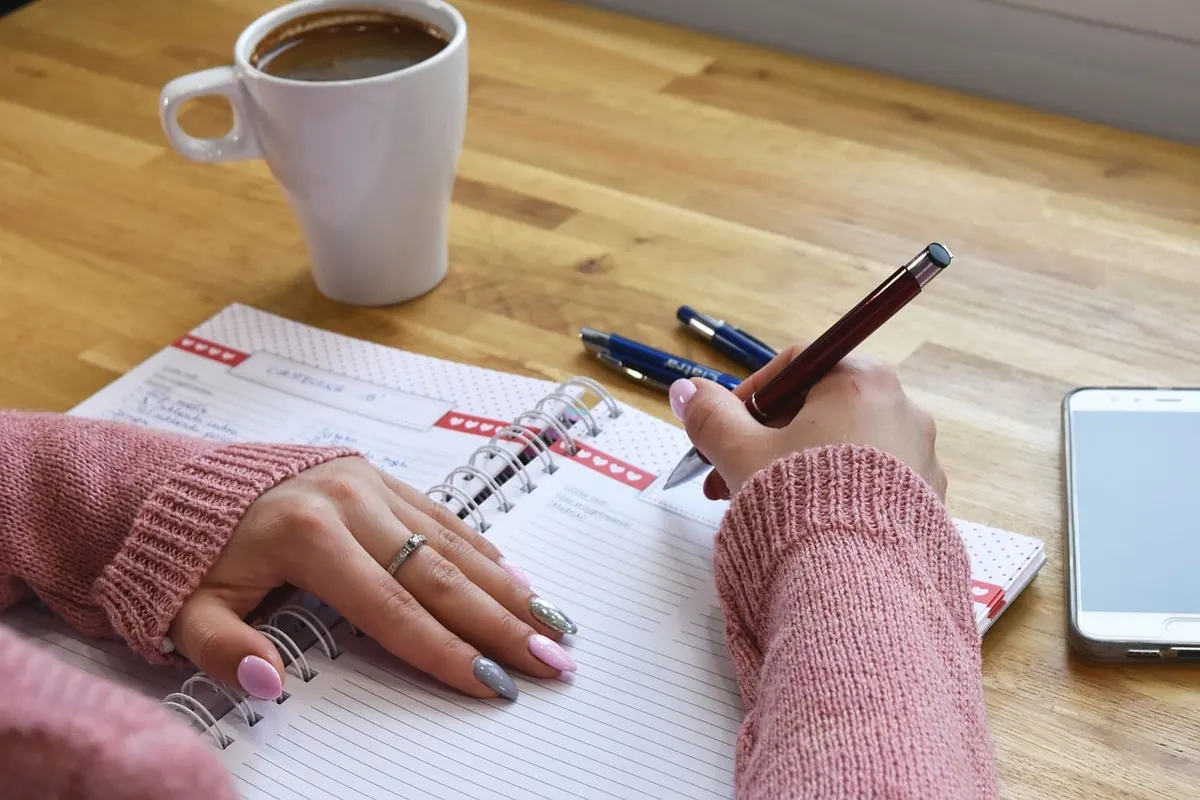
Most journaling habits do not fail because the writer runs out of things to say. They fail because the plan was too big: a blank page, an open-ended hour, and a quiet sense that whatever you write should be more profound than it is. Ten minutes a day sidesteps all of that. It is short enough to fit around the kettle, long enough to catch what actually happened, and small enough that skipping it feels faintly ridiculous. Here is how to build it from nothing, using a routine you already have as the trigger and a timer as the boundary.
Volume is not the point. A journal is useful because it is regular, not because it is long. Ten minutes of honest writing, done most days, produces a record you can actually read back: what you were worried about in March, what you decided in June, how the thing you were dreading turned out.
Longer sessions feel better in theory and are harder to repeat. The people who keep journals for years are rarely the ones who set aside Sunday afternoons; they are the ones who wrote a few lines on a Tuesday because that was the deal they had made with themselves. Treat ten minutes as the target, not the minimum. If you finish early, stop.
The reliable way to make a new habit stick is to bolt it onto an existing one. Choose a moment that already happens every day without negotiation — the kettle boiling, the last light switched off in the kitchen, brushing your teeth, the moment you park the car, the dog's evening walk. Then be specific about the sequence:
After I [existing habit], I will write for ten minutes at [place].
Not "in the evening" — evenings are elastic. "After I put the mug down at the kitchen table" is a cue your brain can act on. Pick one anchor and keep it for at least three weeks before you consider changing it. If your first choice clashes with something real — a child who will not settle, a partner who wants to talk — swap it once, deliberately, then leave it alone. Choosing a new anchor every day is just another way of not having a habit.
A timer does two jobs. It stops the session sprawling into forty minutes of circling, and it removes the daily decision about how long you will write. Ten minutes is not something you have to negotiate with yourself at nine o'clock at night. Set the timer before you sit down.
A kitchen timer is better than a phone if your phone is also your email, your news and your group chat. If you do use the phone, put it on aeroplane mode and leave it face down at the far end of the table. When the timer goes, close the notebook, even mid-sentence. Stopping while you still have something to say is what makes tomorrow's session easy to begin.
An empty page is intimidating; a page with four headings is not. Use this structure until you no longer need it:
The proportions matter less than the sequence. You are moving from fact to thought, which is what turns a log into a journal.
Some days are genuinely thin, but "I have nothing to write about" is usually the sign of a shallow first look. Keep a few prompts on the inside cover and use whichever fits:
Answer one properly rather than five badly. A single honest paragraph is a complete entry.
The habit survives missed days; it does not survive the story you tell about them. Two rules help. First, never miss twice: if yesterday slipped, today is not optional, even if today's entry is two lines long. Second, do not backfill. Writing up four days at the weekend turns a small daily task into a chore with a backlog, and chores get abandoned.
A two-line entry counts. So does a list of three words. The only version that does not count is the one you meant to write later. Make the physical setup do some of the work, too: leave the notebook open, pen resting in the gutter, in the place where your anchor happens. Reduce the friction until writing is easier than deciding not to.
Choose your anchor now, before the day fills up. Put a notebook and a pen where that moment happens. Set a timer for ten minutes this evening, and write the date followed by one sentence about today. That is the whole first session; anything more is a bonus. Repeat it tomorrow and the day after, and within a fortnight the ten minutes will feel less like a task and more like the part of the day when you find out what you think. Keep the bar low, keep the anchor fixed, and the habit looks after itself.
One caveat worth stating plainly: journaling is a useful habit, not a treatment. If regular writing keeps bringing up something heavy — grief, anxiety, a situation you cannot see your way through — a short daily entry is not the place to resolve it. Speak to your GP or a qualified counsellor.
Photo: Alehandra13 / Pixabay